
Amid OpenAI’s release of “ChatGPT Work”, Meta’s release of Muse Spark, and Anthropic’s continuing traction with Claude Enterprise, it’s never been a more confusing time for enterprises making AI decisions. For end consumers, it seems we are heading increasingly toward a super-app combining coding agents, co-creation surfaces, connectors, and plug-ins. That seems like an unstable equilibrium. But who knows? Chinese consumers prefer super-apps with cluttered UIs in sharp contrast to traditional Western design principles of minimalism.
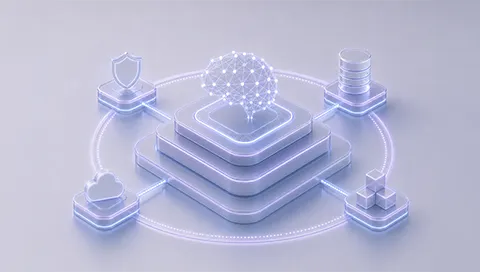
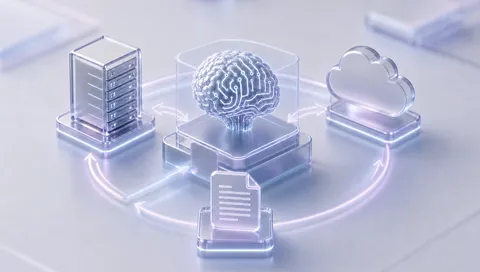
More than ever, there is a blurring of product and platform offerings for enterprises during their AI journey which is causing a massive divergence in adoption pathways. A stark change from what looked largely like commoditized pathways until 6 months ago. To understand how AI platforms are evolving, it’s best to think about it in 3 distinct layers:
- Brain (Frontier Models)
- Loop (Harness) – how the models plan, retry, compact context, call tools, spin up sub-tasks, inject memory, and more
- Body (Runtime) – where execution physically happens, the sandbox, network credentials, filesystem, and more
With this framing, we can group primary offerings (focusing on AI Labs (Anthropic, OpenAI) and Hyperscalers (AWS, GCP, Azure)). For the purposes of this blog, we will refer more to Anthropic’s product family as a reference point, but similar pathways could be extended to other offering families. The reason there is deep market confusion is that some products cleanly line up with this three-tiered view of agentic implementations, while others cross these boundaries in innumerable ways.
Chat Products (ChatGPT, Claude.ai)
This remains the rawest form of interacting with an LLM with a minimal set of overheads. These products allow the models to call basic skills and tools like on-demand charting, document creation, and web search so you can do more in chat.
Where do Chat Products fall in our above structure:
Brain
- You pick one when you select the model of choice in your chat session but tied to the platform provider.
Loop (Harness)
- Harnesses come packaged with the chat product, making tool choices, managing session context, injecting memory, etc.
- Here the “harnesses” are light compared to agentic workflows but still exist to give you a better experience than just speaking with the raw LLM.
- Imagine ChatGPT laying out visual options when asked about shopping / hotels, showing live charts, etc.; these are all examples of the harnesses or “stuff” around the model that improve the experience.
Body (Runtime)
- All chat sessions are completely cloud-hosted on the AI Lab’s infrastructure (managed by their favorite cloud provider of the week or, more recently, SpaceX!)
Agentic Coding Tools (Claude Code, Codex, Kiro, Antigravity, GitHub Copilot, Cursor)
To be specific, Claude Code and Codex are more terminal / CLI agents while Kiro, Cursor, and Antigravity are more full-fledged IDE offerings. In either case, clearly, agentic SDLC + Sonnet 3.5 and above was a breakthrough for the AI industry. Collectively, we underestimated the value of excellent harnesses packaged with underlying model offerings. Claude Code’s initial model + harness power of interacting with bash and shell commands, navigating your repository structure, scaling with skills and subagents, introducing my personal favorite feature, agent views to see parallel sessions (Claude Code Agent View), and more was groundbreaking. I believe a key reason it was so successful was its understanding of the potential of recursion within harnesses. The ability of Claude Code to spin up more Claude Code sessions focusing on multiple parallel developer tickets, identifying dependencies, and merging PRs, along with features like auto-mode laid down the path of increasingly autonomous software engineering. The flywheel Anthropic is getting out of the best engineers working on and with Claude Code is tangible. The main advantage Claude Code product teams have is early access to Claude model updates, allowing them to stay ahead of the curve by design because they can finetune harnesses as per newer model updates.
So, where do Agentic Coding Tools fall on our 3-layered spectrum?
Brain
- You can connect most Agentic Coding Tools with any model of choice hosted anywhere (Bring External Models to Claude Code) – frontier models squarely sit outside the agentic coding tool offering. These should be viewed as independent components; don’t let any sales team tell you otherwise!
Loop (Harness)
- Agentic Coding tool-specific moat; this is a hot and diverging area of differentiation. The decisions of compacting context, using skills, spawning sub-agents, hooks, dealing with specs, and asking for human intervention are all pretty opinionated decisions the Claude Code or Agentic IDE team makes. There can be different ways of thinking about these harnesses, which is why there may be increasing divergence in Agentic IDE offerings (experience difference between Kiro and Claude Code is significant). Fundamentally, these are the binaries you download when you install Claude Code, Codex, or an open-source alternative like Open Code.
Body (Runtime)
- For most Agentic Coding Tool flows as of today, the body is literally your dev environment; no sandbox or vault. It has direct access to your local filesystem and through hooks (tool calls, shell commands, etc.) you must control what actions you are okay with the agent taking (unless you’re brave with auto-mode); you can actually get a ton out of maximizing the Claude Code setup for a team, and if you’re a team in which developers are at the centers of decisions (as I imagine Anthropic is) – through Claude Code, the developers over time will take on more ambitious independent projects driving product roadmaps ahead.
- The line blurs when you use Claude Code in “headless” mode. For example, if you register the GitHub App with Claude Code, you can tag @Claude to an issue and have it spin up the Claude Code agentic harness through GitHub Actions, fork a worktree, work on an issue, and file a PR (now the same claude code harness running not on Anthropic VMs, not on local machines but on GitHub’s pre-existing CI compute). So, you move from developers creating and managing agent sessions to a more trigger-based workflow with a human reviewing the result / PR on GitHub (spending their time less in the IDE).
- There is also the option of using Claude Code on Anthropic’s infrastructure (claude --cloud), transferring ongoing sessions from your terminal to the cloud. This illustrates more than anything the decoupling of the Loop (Harness), which is in all cases Claude Code binaries, from the Body (Runtime), which can be a local dev environment or cloud-hosted sessions. Unlike GitHub, Slack does not have a pre-existing solution like GitHub Actions to provision compute for a CI job so calling @Claude in Slack (feature in Beta (Claude Tags)) will spin up a web Claude Code session managed on Anthropic’s VMs. Over time, Anthropic will have to partner with more and more apps. MCP was the easy part, but to natively integrate and weave in cloud-hosted Claude sessions inside existing systems of work is no small task. Technically or commercially, they need to do this as the Brain and Harness remain highly competitive. Partner integrations for running those harnesses from different systems of work will probably determine long-term adoption.
While the direction is going to continue moving from human-orchestrated agentic coding sessions within developer machines (fancy way of saying download and use an agentic coding tool) to asynchronous jobs (event-driven triggers, agent identity independent of user, cloud-hosted long-running sessions), it is unclear how long it will take for autonomous coding agents to prove themselves, and for now, making developers 10X super-users of agentic coding tools with shared skills, tools, and best practices seems like the best bang for your buck. You can use Claude / Cursor / GitHub Copilot locally on dev machines with models hosted on cloud environments, allowing for cost control and centralized tracing; this gives you a lot of the value most engineering teams are seeking.
It is no surprise that software engineering has been the most successful frontier use case of agentic AI. Multiple decades of progress across areas like CI/CD, infrastructure automation, testing frameworks, developer collaboration, etc., make it a ground ripe for agentic AI.
Co-working surfaces (Claude Cowork, OpenAI Work)
Software engineering is one surface. An important one, yes, but living in an IDE is not applicable to a majority of workers. Anthropic is trying to replicate its success with Claude Code to knowledge work more broadly. Claude Cowork allows you to spin up tasks to draft presentations, edit documents, conduct research, query uploaded project docs, among many others. Additionally, through its off-the-shelf connectors, plug-ins, and ability to extend with custom-built MCP servers, users can power a range of use cases across support, sales, marketing, management, data reporting, etc. This harness is essentially a de-skinned version of Claude Code. It has essentially the same strategies around tool-calling, context compaction, etc. but there could be a few differences. For example, Claude Cowork often creates “to-do lists” for complex tasks. Claude Code can do this as well, but Cowork would default more for utilizing this construct. Anthropic is increasingly consolidating Cowork and Chat, so though there will be 3 surfaces (web, desktop app, mobile), all sessions are unified and exist on Anthropic’s VMs. The desktop app will be a gateway for the harness to interact with your local file system, but moving forward, the sessions will get spawned and managed on the cloud (currently, local execution is available for Claude Desktop). Similar to Claude Code, Claude Cowork will undergo a journey of exploring what it means to offload tasks to agents (there are attempts for the same with Routines and Scheduled Jobs, but it’s in its infancy). The truth is that the parallelism offered by software engineering tasks does not generalize well to non-software-engineering workflows, so this will be an ongoing effort by all major providers.
Applying the 3 -layered structure for co-working surfaces (in their current state) –
Brain
- As an individual using Claude Cowork, you cannot bring external models. There is a cost for Anthropic to run Claude Cowork (hosting sessions, memory, tasks, etc.), which is absent from Claude Code (largely client-side). To bear that additional cost, you have to use Claude Models so Anthropic can preserve their margins. Similar to the chat offerings, you are bound to the provider’s model family.
- There are exceptions in enterprise ecosystems with Claude Platform on AWS (Claude Platform on AWS) giving you the ability to deploy Claude Cowork along with your preferred gateway and model choices.
Loop (Harness)
- Largely similar to Claude Code. No one has yet figured out the right harnesses for knowledge work, so expect this area to evolve.
Body (Runtime)
- Completely on Anthropic-managed runtime.
These flagship products by Anthropic combine the brain, loop, and body in different ways. Let’s extend this construct further by covering other key market offerings to bring home the point that leaders need to think of these 3 axes in their AI adoption journey, or they risk repetitive build-outs, lack of standardization, and proliferation of shadow AI in the enterprise.
Brain
The competitive foundation model market is all about data curation, training infrastructure, and model quality. Offerings are currently a dime a dozen, and enterprises can get access to most models in the market via their cloud gateways or third-party tools like LiteLLM (preferred tooling of Cybage). Leading models, as of this article, include model families of Claude, GPT Models, Gemini, DeepSeek, Qwen, Llama, and more.
Loop (Harness)
This is an area evolving the fastest with the highest current differentiation. Until now, teams have been building custom harnesses from the ground up using agent development kits. These include (Claude Agents SDK, Strands SDK, Google Agent Development Kit, LangChain, etc.). They provide abstraction layers for teams to build custom harnesses. Most recently, Anthropic’s Claude Managed Agents offering (Claude Managed Agents) sets the tone for a new class of offerings: harness-as-product. The argument goes that a lot of what makes harnesses usable (events such as tool results, HITL, built-in tools, statefulness, etc.) is required for use cases across the spectrum of agentic engineering. In this case, it would make sense for an evolving category of harness-as-product offerings from major providers, but they should expect things to be highly competitive between foundation labs and hyperscalers, as both try to enter the harness conversation.
Body (Runtime)
Of course, you can always deploy any agent on basic cloud compute instances. However, with AWS Bedrock AgentCore (AWS Bedrock AgentCore), Gemini Enterprise Agent Platform (Gemini Enterprise Agentic Platform), and Microsoft Foundry (Microsoft AI Foundry), you get agentic runtime. This is closer to a purer infrastructure-for-your-harness offering. These are modular platforms (Runtime, Memory, Gateway, Identity, and more) that work with any framework (CrewAI, LangGraph, Strands) and any model. For larger enterprises that need strong identity management for agents, long-running compute purpose-built for agentic workloads, prompt injection threats, blast radius of autonomous agents, and more, these offerings remain highly sought after.
Enabling the Agentic Enterprise
Now that we have a working understanding of the AI stack, it is easy to see why enterprises are already diverging so widely on their strategies to deal with the changing offerings, build vs buy, and platform roll-outs. Enterprises have a whole host of other considerations around vendor lock-in, cost control, security and compliance, governance and monitoring, etc., which require complex solutions for a spectrum of needs. In the upcoming blogs, we will go deeper into applying the “Brain / Loop / Body” analogy to enterprise AI architectures that have to implement this at scale for their teams as well as peek deeper into Cybage’s own AI journey as we make decisions on buy vs build, low-code vs custom agents, cost control, who’s an agent builder vs consumer, agentic platforms, and more.
Authored by
Aneesh Nathani
VP - Data and AI, Cybage Software