
Artificial intelligence is attracting unprecedented levels of investment and attention. Organizations are exploring various uses, including generative AI, automation, and agent-based systems. While early projects show promise, it is still hard to expand them throughout the business. For many organizations, the gap between experimenting pilots with AI and seeing real operational results is larger than they thought. Most initiatives stall because they are built as isolated experiment pilots rather than as part of a broader operational architecture that supports governance, integration, speed, cost, efficiency, security, flexibility, and scale.
People think that better models automatically lead to better results, but that's not always true. The real challenge is often not the technology itself, but how enterprise AI solutions are engineered and designed. Most business systems were built to support execution while decision-making remained separate. As data volumes grow and response times shrink, that separation is becoming a constraint.
The Missing Ingredient: Context, Not More Models
For a long time, most conversations about AI were about making models more advanced. Companies invested in larger models with more parameters, greater computing power, and broader training data in the hope of achieving better results. These things still matter, but they do not guarantee business value. Intelligence is more than just processing information. It means understanding context, making good decisions, and taking actions that support business goals. As AI improves, this difference is becoming increasingly important. Companies already have large volumes of structured and unstructured data. The main challenge now is not adding more models, but redesigning systems so they can respond, adapt, and work as part of daily business.
For example, a model used for customer service agent might generate accurate responses. However, without access to company policies, compliance rules, customer history, and escalation procedures, its effectiveness remains limited.
The industry is moving from developing standalone AI models to building platforms that integrate intelligence throughout the business. Leading organizations are embedding it directly into workflows, allowing information, decisions, and actions to flow together.
From Systems of Record to Systems of Intelligence
Enterprise technology has long used systems of record to track transactions, keep data accurate, and help organizations understand their operations. Tools such as ERP systems, CRM platforms, and data warehouses have supported many companies.
These systems are still important, but organizations are increasingly focusing on systems of intelligence. These new systems analyze data, identify patterns, provide recommendations, and support faster decision-making. Traditional systems excel at storing information and supporting transactions. What they were not designed to do was to continuously interpret changing conditions and respond in real time. Systems of intelligence address this gap by integrating data, context, and decision-making within a single operating environment. This shift is changing how businesses work.
Agentic Enterprises: When AI Starts Driving Outcomes
The next phase of enterprise AI adoption goes past just offering help and moves into taking action. Many companies already use copilots to create content and offer suggestions. Agentic systems go further by handling tasks, organizing workflows, and executing actions within defined limits.
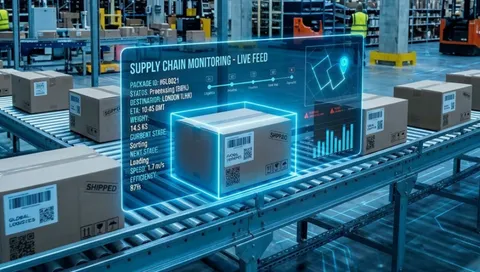
In an agentic enterprise, these systems spot events, weigh options, and act in accordance with set rules. They monitor risks, handle service requests, improve workflows, and support customer interactions, with little need for people to step in. For example, an agent might notice a supply chain issue, check inventory, alert the appropriate teams, and initiate a planned response.
When businesses have more autonomy, they can make decisions faster, respond more quickly, avoid delays, and grow more easily. But with more autonomy comes greater responsibility. As AI becomes a bigger part of business, it is important to build trust, manage AI effectively, and comply with regulations to encourage wider adoption. Companies should set clear policies, be transparent, and ensure that people overseeing AI use do so responsibly to achieve their goals. Good governance should be built into systems from the start. By planning decisions, actions, permissions, and business rules together, companies can keep their operations accountable and easy to track.
Measuring What Matters: The New Enterprise Value Framework
AI projects often miss their strategic goals because organizations focus on the wrong results. Many track success by counting users, pilots, or deployed models. While these numbers show activity, they do not prove the organization is creating real value.
The main challenge is no longer just about deploying more models, but about making real improvements. Now, success means using technology to improve how quickly and smoothly things get done, and how well results are delivered. Signs of real impact include faster business results, happier customers, and higher revenue. Artificial intelligence services should help organizations work faster, operate more efficiently, deliver better service, and grow.
Performance is only one part of success. Companies need to balance strong results with trust, compliance, transparency, and risk management. Ignoring these areas can cause serious problems down the line, even if things look good at first.
Looking forward, successful companies will blend advanced technology with human judgment, clear policies, and strong operations. As technology becomes easier to access and similar across companies, the real advantage will come from how well organizations update their systems and workflows to use it. The most successful businesses will not be the ones using the most AI, but those getting the best results from it.