
For years, the "resilient supply chain" was the answer to every risk conversation. Build redundancy. Stockpile buffer inventory. Have a Plan B ready. It sounds solid until the disruption does not look like the one you planned for.
The last few years proved that resilience, as most organizations practice it, is really just expensive defensiveness. The pattern is always the same: absorb the hit, recover, and wait for the next one.
There is a better frame, and it is not just a mindset shift. It is a fundamentally different way to build and operate a supply chain.
The Illusion of Resilience
Ask most supply chain leaders if they are resilient. Most will say yes. Then ask what happened the last time a key supplier went dark or a port backed up for weeks. The answers are usually the same: frantic calls, manual workarounds, and a recovery that costs more than budgeted.
The financial hit is only part of the story. The slower damage is harder to see and recover from: customer relationships fraying, preferred vendor status slipping, and contracts going elsewhere.
Resilience strategies are designed for one thing: restoring the status quo. And when the next disruption arrives, and it will, the cycle starts again from zero.
Resilience vs. Antifragility: A Shift in Mindset
Nassim Taleb, the risk theorist and author of Antifragile, has a concept that is straightforward once you strip the theory out of it: some systems break under pressure, some survive it, and some, the antifragile ones, actually come out stronger. That last category is where supply chains need to be.
The difference is not about having better backup plans. A resilient supply chain activates its backup when a supplier fails, gets operations running again, and files the incident away. An antifragile one does something different. It reroutes in real time, updates its network model on the fly, recalibrates risk scores across the supplier base, and comes out the other side better configured than it went in.
That gap compounds over time, and it shows up in your margins.
The Cost of Playing Defense
Every resilience investment has a price tag that rarely gets stress tested. Safety stock ties up working capital. Dual-sourcing agreements add procurement overhead. Contingency plans take analyst hours that could go toward optimization. You are paying continuously for something that only activates when things go wrong, and even then, all it does is get you back to square one.
In a margin-pressured environment, that is not a neutral position. Standing still with a defensive strategy is a choice. It just does not always feel like one until a competitor pulls ahead.
What Makes a Supply Chain Antifragile
Three things have to be true at the same time:
- Optionality: Flexible network configurations that can actually be activated, not just documented in a continuity plan.
- Signal sensitivity: Reading supplier, demand, and logistics signals continuously, not catching up on them quarterly.
- Structured learning: Every disruption updates your models. Risk scores, supplier rankings, and network configurations all evolve. The chain gets smarter.
When these three run together, disruption stops being a cost center and starts being a feedback mechanism.
From Reaction to Advantage: How Leaders Are Transitioning
The organizations making this shift are not doing it through strategy documents. They are building three concrete capabilities:
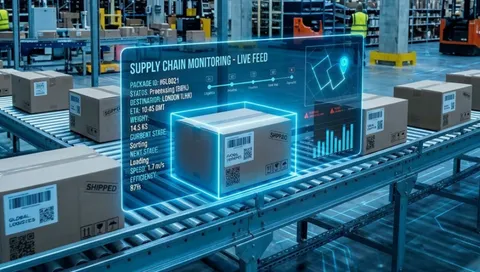
- Real-Time Decisioning: Control towers connected to live data, supplier feeds, logistics networks, and demand signals that let operations teams reroute in hours, not weeks.
- Network Reconfiguration: Dynamic network modeling that activates alternate suppliers, redirects logistics lanes, or shifts production nodes based on current conditions, not last quarter's reality.
- Continuous Learning Loops: Every disruption updates demand models, supplier scorecards, and risk frameworks. The next planning cycle is genuinely different, not just a copy with updated dates.
AI as the Engine of Antifragility
Antifragility at scale is fundamentally a speed problem, and one that human planning cycles cannot solve alone.
A monthly planning cycle catches supplier stress after the fact. A quarterly review doesn't catch it at all. With AI, organizations can compress the detection window from weeks to days, as ML models surface risks 6–8 weeks in advance, so inventory can be realigned and alternate sourcing activated before a disruption lands, not after.
On the demand side, AI replaces the monthly snapshot with a live daily signal. On the procurement side, reordering logic runs continuously, adjusting to real-time inventory levels, lead-time variability, and supplier health, with no analyst intervention required.
After a disruption, organizations can use AI to trace the structural cause, not just the surface event, and updates network configuration automatically. The next time a similar stress hits, the chain is already better positioned. That compounding advantage is what resilience cannot match.
Building the Capability Stack
Antifragility is not a technology purchase; it is a stack, and the order matters. You cannot build decision intelligence on flawed data or automate execution when platforms cannot connect with partners. Each layer must be strong before the next can deliver value.
It begins with unified, real-time, and clean data, not fragmented ERP exports stitched into reports. Next come cloud-native, API-first platforms that onboard suppliers and data sources without months of integration. Then, decision intelligence AI and analytics that offer recommendations, not just dashboards. The final layer is execution: workflow automation and exception handling that translate insight into coordinated action across procurement, logistics, and operations, transforming the stack into a competitive asset.
Where IT Partners Accelerate Outcomes
Most supply chain teams have the intent to build this. The gap is usually not ambition; it is bandwidth and depth. Building ML pipelines, integrating real-time control towers, and engineering platform flexibility while also running day-to-day operations is a lot to carry.
Not a generalist integrator, but a team that has actually built visibility platforms, demand sensing models, and multi-tier supplier networks from the ground up.
That is what Cybage's supply chain resilience consulting is built to do, combining platform engineering, AI-led decision intelligence, and operational strategy to help organizations move from reactive to genuinely antifragile, faster than they could do it alone.
A Practical Starting Point
Before you invest in a new platform or AI model, be honest about where you actually stand. Answer these six questions:
- Do you have real-time visibility beyond Tier 1 suppliers, or does your view stop there?
- Can you reconfigure your supply network within 48 hours of a major disruption, or does that take weeks of manual effort?
- Is your demand forecast refreshed on live signals weekly, or built once a month on static inputs?
- Does your post-disruption review actually change your models, or produce a report that lives in a folder?
- Are your procurement triggers dynamic, or thresholds set by someone in a spreadsheet years ago?
- Does your control tower drive autonomous resolution, or just alert a human to go sort it out manually?
Every "no" in that list is a gap between resilient and antifragile. The organizations closing those gaps fastest are not just getting through disruptions. They are coming out the other side with better networks, sharper models, and a structural edge over competitors who are still bouncing back.
That is the supply chain worth building.
Learn more: Supply Chain and Logistics, Strategy and Management Consulting Services | Cybage